Bridging the Gap
Background
Bridging the Gap brings together health, social care, education and community partners to develop and expand high-quality practice learning beyond traditional acute settings.
We focus on turning ideas into practical solutions. Working with students, placement providers, universities, Integrated Care Boards and national partners, we develop, test and share innovative approaches to placements, supervision and assessment.
Our work includes expanding practice learning across social care and community settings, developing new supervision models, creating opportunities for interprofessional learning, and strengthening pathways between education and the future health and care workforce.
Through the Bridging the Gap Network, we are now connecting this work across organisations and regions so that successful approaches can be shared, adapted and scaled rather than developed in isolation.
Our focus is simple: to create high-quality practice learning that reflects where people receive care and prepares students for the future health and care workforce.
Next event date May 2027
Bridging the Gap Conference 2026
Our second Bridging the Gap Conference, held at the University of Exeter on 13 May 2026, brought together students, providers, educators and regional and national partners from across health, social care and community sectors.
The conference showcased innovative approaches already being developed across the region and explored how we move from individual projects to sustainable models that can be shared and scaled.
Key themes included social care as a high-quality learning environment, innovative supervision and assessment, creative health, integration across health and social care, and developing the future workforce.
The clear message from the conference was: the next step is to connect what is working and support it to spread, scale and be sustained.
What we do
Bridging the Gap goes beyond discussion: it activates and accelerates real, system-wide change in how student nurses learn in the community. Working in collaboration with NHS England, NHS Devon ICB, BNSSG ICB, and Skills for Care, we co-design, test and scale new placement models that strengthen the social care workforce pipeline and enhance the quality of practice learning across diverse community settings.
Our work directly supports the Skills for Care and CoDH Placement Strategy, ensuring that adult social care is recognised as a robust, enriching and high-quality placement environment. We help operationalise the 10-Year NHS Workforce Plan’s three shifts by:
- Expanding training routes: developing innovative placement options in social care, creative health and community-led environments.
- Supporting and growing the social care workforce: designing national practice supervisor resources, training pathways, and sector-wide capability building.
- Transforming care: embedding integrative, arts-based and person-centred learning that prepares students for modern, multidisciplinary practice.
We lead research, facilitate communities of practice, build cross-sector partnerships, and champion student voice. Our initiatives connect health, social care, education and creative sectors—bridging gaps in understanding, opportunity and innovation. Through this work, Bridging the Gap shapes a sustainable, integrated workforce vision rooted in compassion, creativity and community.
What we're doing next
Our next phase is focused on moving from innovation to spread, scale and sustainability.
From September 2026, the Bridging the Gap Network will connect people developing and delivering community-based practice learning with partners who can help remove barriers and support wider implementation.
Together, we will share practical placement models and Standard Operating Procedures, build the evidence base, develop new interprofessional learning opportunities and work collectively on challenges including supervision, governance, funding and perceptions of community and social care placements.
Our ambition is to move from individual innovation to collective impact.
Aims and Objectives
Aim
The overarching aim of Bridging the Gap is to redefine and elevate practice learning within community-based settings, fostering models of education that inspire meaningful, sustainable change across health and social care. The initiative positions community environments—including social care, creative health, and wider third-sector organisations—as central to preparing future nurses for holistic, relationship-centred and system-aware practice.
Objectives
To achieve this aim, Bridging the Gap seeks to:
- Broaden the range of high-quality, community-rooted learning opportunities available to nursing students, including adult social care, creative-health, and multidisciplinary community settings.
- Demonstrate the educational value of non-traditional and emerging placement locations.
- Support national workforce strategies by developing sustainable placement models that increase supervision capacity, enable sector-wide participation, and reduce pressure on traditional NHS settings.
- Strengthen the capability and confidence of supervisors across social care and community sectors through targeted development and partnership working.
- Build and nurture strategic partnerships across health, social care, local authorities, ICBs, and creative-health organisations.
- Facilitate shared learning, interconnected pathways and integrated approaches that align with the Skills for Care/CoDH Placement Strategy and the DHSC 10-Year Workforce Plan.
- Embed learning experiences that cultivate adaptability, creativity, compassion and a deep understanding of community-based care.
- Equip students with the skills, values and cultural awareness required for modern, integrated, person-centred nursing.
Join the Bridging the Gap Network
The Bridging the Gap Network brings together people from across health, social care, education and community sectors who share an interest in developing high-quality practice learning beyond traditional settings.
The network provides a space to connect, share what is working and collaborate on practical solutions. Whether you are developing placements, supporting students, leading workforce development or interested in learning from approaches being developed elsewhere, we would be delighted to hear from you.
By joining the network, you can:
- connect with others developing community and social care practice learning
- share ideas, resources and examples of good practice
- collaborate on new projects and opportunities
- contribute to the development and sharing of scalable placement models and resources
- hear about future Bridging the Gap events and activities
Join us and help move community-based practice learning from individual innovation to collective impact.
Join the Network
Please email Jade Rihan – j.rihan@exeter.ac.uk
Welcome: about me (founder)
Welcome to Bridging the Gap. I’m Cathy Rant, Clinical Practice Lead at the University of Exeter Academy of Nursing and founder of this initiative. Bridging the Gap is rooted in nearly 39 years of experience in the social care sector, working across frontline roles, leadership and service management. My career has included guiding teams and residents through the COVID-19 pandemic — an experience that deepened my commitment to compassionate, community-based care and to preparing future nurses for the realities of practice.
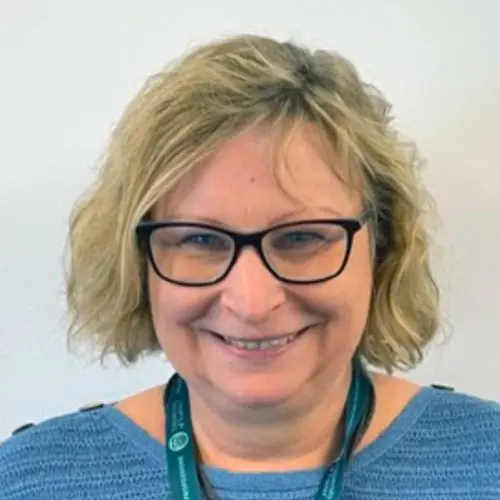
Since joining the University of Exeter in 2023, I have led the expansion of our social care and PVI placement provision by 150%, ensuring every student nurse undertakes a placement beyond the acute trust. I have also shaped Exeter’s social care placement strategy and pioneered our Creative Health Placement Pilot, enabling students to learn through arts, nature, movement and community-based wellbeing activities. These experiences have shown the profound impact of creative health on student confidence, resilience and holistic practice — strengthening our belief that wellbeing and learning are deeply interconnected.
Nationally, I collaborate with Skills for Care, the Council of Deans of Health, NHS England, NHS Devon ICB, and BNSSG ICB to diversify, elevate and reimagine community-based practice learning.
Bridging the Gap embodies my commitment to valuing community, inspiring innovation, and building meaningful connections across health and social care.
Collaborators (co-founders for 2026)
Nicki Wright
Placement Lead, Devon Integrated Care Board (ICB)
Karen Burbridge
Workforce Project Manager, Bristol, North Somerset and South Gloucestershire (BNSSG) Integrated Care Board (ICB)
karen.burbidge1@nhs.net
Caroline Woolnough
Education and Training Placement Lead, NHS England – South West
c.lilley-woolnough@nhs.net
Bridging the Gap Conference 2026: Key Findings and Next Steps
Reimagining Community-Based Practice Learning: Inspiring Change
On 13 May 2026, the University of Exeter Academy of Nursing welcomed delegates from across health, social care, education and community sectors to our annual Bridging the Gap Conference.
The event brought together representatives from NHS England, the Nursing and Midwifery Council (NMC), Skills for Care, One Devon ICB, BNSSG ICB, Higher Education Institutions, social care providers, creative health organisations, students and educators to explore how we can work together to strengthen and expand community-based practice learning.
The strategic case for this work has never been stronger. The move towards prevention, care closer to home and greater use of digital approaches requires a contemporary nursing workforce that understands care across organisational and professional boundaries. Increasing high-quality learning opportunities within social care, primary care, community and voluntary sector settings is therefore not simply about increasing placement capacity; it is about preparing students for where and how people will increasingly receive care.
The conference showcased a range of innovative projects and collaborative approaches, including creative health placements with the Pelican Project, the T Level Health and Student Nurse partnership with Exeter College, innovative supervision and assessment models in social care, the national Practice Supervisor resource for non-nurse Registered Managers, long supervision models, placement technology solutions, and examples of placement expansion across social care, primary care, hospices, prisons and independent sector providers.
Importantly, the 2026 conference moved the conversation forward. We know that innovative community placement models can work. The next challenge is how we spread, scale and sustain successful approaches while maintaining high-quality learning, governance and regulatory assurance.
Conference Impact at a Glance
- National representation from NHS England, Skills for Care and the Nursing and Midwifery Council.
- Regional collaboration with One Devon ICB, BNSSG ICB, social care providers, creative health organisations and education partners.
- Participation from Higher Education Institutions across the South West and beyond, including the Universities of Plymouth, Bournemouth and the University of the West of England.
- Student and provider panel discussions sharing lived experiences of community-based practice learning.
- Showcase of innovative placement, supervision and assessment models.
- Five feedforward workshops exploring future opportunities for practice learning and workforce development.
- Launch of the Bridging the Gap Network.
- Commitment to develop and share scalable Standard Operating Procedures (SOPs) to support wider adoption and adaptation of successful placement models.
What We Heard
1. Social Care Must Be Recognised as a High-Quality Learning Environment
Delegates consistently highlighted the need to challenge outdated perceptions of social care and recognise the breadth and complexity of learning opportunities available across community settings.
Students described gaining enhanced communication, leadership, clinical reasoning, professional confidence and person-centred care skills through social care placements. Providers highlighted the unique opportunities available for students to understand people's lived experiences, long-term conditions, continuity of care and the wider determinants of health.
There was strong agreement that social care should be viewed as an integral part of nursing education rather than an alternative to traditional healthcare settings.
A continuing challenge is culture. Community and social care placements can still be perceived by students, and sometimes by educators and the wider workforce, as less valuable than acute placements. Positive placement experiences can transform these perceptions. Student voices and student advocates will therefore be central to the next phase of Bridging the Gap, helping demonstrate the breadth, complexity and value of learning across social care and community settings.
2. Innovative Placement, Supervision and Assessment Models Are Working
A key message from the conference was that innovative placement, supervision and assessment models are already demonstrating success across the region.
Delegates heard examples of hub-and-spoke placements, long supervision models, creative health placements and placements supervised by non-nurse Registered Managers. There was strong recognition that indirect supervision and assessment models can be implemented safely and effectively when supported by clear governance, strong partnerships and robust preparation of Practice Supervisors and Assessors.
Students, providers and educators reported positive experiences of these approaches, highlighting increased placement capacity, enhanced learning opportunities and improved understanding of community-based care.
The national Practice Supervisor resource for non-nurse Registered Managers was highlighted as an important enabler in building confidence, consistency and sustainability across the sector.
The next stage is therefore not simply to develop further individual pilots, but to identify the elements that make successful models transferable and support other organisations to adopt and adapt them within their own settings.
3. Better Integration Across Health and Social Care Is Essential
Delegates highlighted the need for greater understanding and collaboration between health and social care organisations.
Discussions identified opportunities to improve information sharing, strengthen partnerships, create shared learning experiences and help students better understand the full journey of people receiving care across health and social care systems.
There was widespread support for more integrated approaches to workforce development, practice learning and service delivery.
This requires stronger relationships between Approved Education Institutions (AEIs), providers, Integrated Care Boards and other system partners. Bridging the Gap aims to support these strategic-to-operational relationships, helping those developing placements on the ground connect with organisations and decision-makers able to address wider system barriers.
4. Creative Health Has Significant Potential
Presentations from creative health partners demonstrated the significant contribution that arts, culture and community engagement can make to student learning and person-centred care.
Delegates heard how creative health placements can enhance empathy, communication, relationship-centred care and understanding of people's lives beyond traditional healthcare environments, while introducing students to innovative approaches to improving health and wellbeing.
There was strong support for embedding creative health opportunities within mainstream practice learning rather than viewing them solely as standalone pilot projects.
5. Building the Future Workforce Requires a Whole-System Approach
Across all discussions, delegates recognised that workforce development is a shared responsibility.
Opportunities were identified to improve visibility of social care careers, increase student exposure to community settings, strengthen relationships between providers and universities, and develop new pathways into nursing and care professions.
There was also recognition of the growing importance of digital innovation, neighbourhood models of care, integrated workforce planning and collaborative leadership across sectors.
Community and social care placements have an important role in preparing students to understand prevention, holistic care, integrated working and people's journeys across health and care. They also provide opportunities to influence future career choices and strengthen understanding of the breadth of nursing careers available beyond acute hospital services.
Our Progress So Far
Since launching the Bridging the Gap initiative in 2025, the University of Exeter Academy of Nursing has:
- Expanded social care placements across residential and nursing care, learning disability services and domiciliary care.
- Established social care as a core part of practice learning at the University of Exeter, with all student nurses undertaking a social care placement during their programme.
- Developed innovative T Level Health and Student Nurse placement models in partnership with Exeter College and One Devon ICB.
- Introduced creative health placement opportunities across a range of community organisations.
- Expanded practice learning opportunities into hospices, prisons, primary care and independent mental health settings.
- Increased placement opportunities to almost 140 placements across Devon, Cornwall and Somerset within community, private, independent and voluntary sector settings.
- Led the development of the national Practice Supervisor resource for non-nurse Registered Managers in partnership with Skills for Care.
- Developed and evaluated innovative approaches to supervision and assessment within non-traditional placement environments.
- Shared learning from this work regionally, nationally and internationally through conferences, professional networks, evaluation, research and publication.
From Innovation to Spread, Scale and Sustainability
The 2026 conference and subsequent strategic discussions have reinforced that the next phase of Bridging the Gap must move beyond individual innovation.
Significant progress has already been made across the Southwest, with successful approaches emerging in Devon, BNSSG, Dorset and elsewhere. The opportunity now is to connect this work so that organisations can learn from each other rather than repeatedly solving the same challenges independently.
The next phase will focus on spread, scale and sustainability: identifying what works, understanding why it works, developing the governance and resources that enable it, and supporting organisations to adapt successful models to their own local contexts.
This is particularly important as some of the easier barriers to placement expansion have already been addressed. Future growth will increasingly depend upon collective action around more complex issues, including culture, supervision, governance, quality assurance, funding and tariff arrangements, and assumptions about where students can learn and who can appropriately supervise them.
Our Next Steps
Our next phase of work will focus on:
- Establishing the Bridging the Gap Network as an action-oriented partnership from September 2026.
- Developing and sharing a suite of Standard Operating Procedures (SOPs) for scalable placement, supervision and assessment models.
- Sharing evidence-based approaches that can be adopted and adapted regionally and more widely.
- Supporting organisations to develop as high-quality practice learning environments and Approved Placement Providers.
- Expanding opportunities for interprofessional learning and community-based practice education.
- Developing further collaborative learning models between T Level Health students and student nurses.
- Expanding multidisciplinary approaches to practice learning across social care and community settings.
- Strengthening partnerships between Approved Education Institutions, Integrated Care Boards, health and social care providers, education and community organisations.
- Increasing the involvement of students and student advocates in challenging perceptions of community and social care placements.
- Evaluating and disseminating outcomes from innovative practice-learning models.
- Continuing to build the evidence base through placement evaluation, student and provider feedback, research and publication.
- Keeping wider system barriers, including tariff, funding, supervision and governance, visible and working collaboratively with partners who can influence change.
Through Bridging the Gap, we aim to create sustainable, scalable and transferable models that support the development of a contemporary nursing and healthcare workforce across health, social care and community settings.
Join the Bridging the Gap Network
The 2026 conference also marked the launch of the Bridging the Gap Network.
From September 2026, the network will develop as an action-oriented partnership, bringing together providers, educators, students, policy makers, commissioners and system leaders who share a commitment to transforming community-based practice learning and strengthening the future workforce.
The network will connect people developing and delivering innovative practice learning with those able to influence systems, remove barriers and support wider implementation.
Approved Education Institutions will have an important role in leading delivery in partnership with providers, Integrated Care Boards and other stakeholders, while Bridging the Gap provides a collaborative space to convene, connect, share learning and support the spread of successful approaches.
By joining the network, members will have opportunities to:
- Share innovation, resources and best practice.
- Learn from placement models already being implemented across the region.
- Collaborate on projects, evaluation and research.
- Contribute to the development and refinement of shared SOPs, resources and guidance.
- Identify common barriers requiring regional or wider action.
- Support workforce development across health and social care.
- Strengthen student involvement and advocacy.
- Participate in future Bridging the Gap events, workshops and activities.
Join the Network
Please email Jade Rihan j.rihan@exeter.ac.uk
Partner Organisations
If your organisation would like to be involved in future events, projects, research or collaborations, please complete the registration form and share your organisation logo for inclusion on our Bridging the Gap partner network page.
The challenge is no longer simply to create more community placements. It is to change perceptions of what constitutes valuable practice learning, connect the innovation already happening across our systems, and create the conditions that enable successful models to spread, scale and be sustained.
Together, we can continue to reimagine community-based practice learning and inspire change across health and social care.
The 2025 Bridging the Gap Conference brought together a focused group of approximately 50 delegates, representing a diverse cross-section of the health and social care system. Attendees included undergraduate student nurses, registered managers and providers from nursing, residential and learning-disability settings, social care nurses, and colleagues from the Royal Devon University Healthcare (RDUH) acute trust. The conference also welcomed high-profile national leaders, including Ed Hughes, CEO of the Council of Deans of Health, who delivered the keynote address; Professor Debra Sturdy OBE, Chief Nurse for Adult Social Care; and Lucy Gillespie, National Workforce Lead at Skills for Care.
The central workshop explored perceptions of the gap between health and social care, inviting delegates to surface challenges, opportunities and shared priorities. Participants worked collaboratively to generate practical ideas for bridging the gap through communication, partnership, supervision support and more integrated approaches to practice learning.
During the conference, Cathy Rant presented Exeter’s sector-leading innovations, showcasing the strategic expansion of PVI placement provision, new community-based placement models, and the university’s commitment to ensuring high-quality learning opportunities beyond the acute trust. These discussions highlighted the growing momentum for cross-sector collaboration and the national commitment to reimagining community-based practice learning.
The 2025 conference set the foundation for strengthened partnership working and informed the priorities for the 2026 event.
"I supported Bridging the Gap as it is essential we support all our social care settings to train clinicians for the future. I am on Occupational Therapist and Workforce Project Manager at Bristol, North Somerset and South Gloucestershire Integrated Care Board. My interests and expertise are in apprenticeships and building career pathways."
Karen Burbidge
Workforce Project Manager